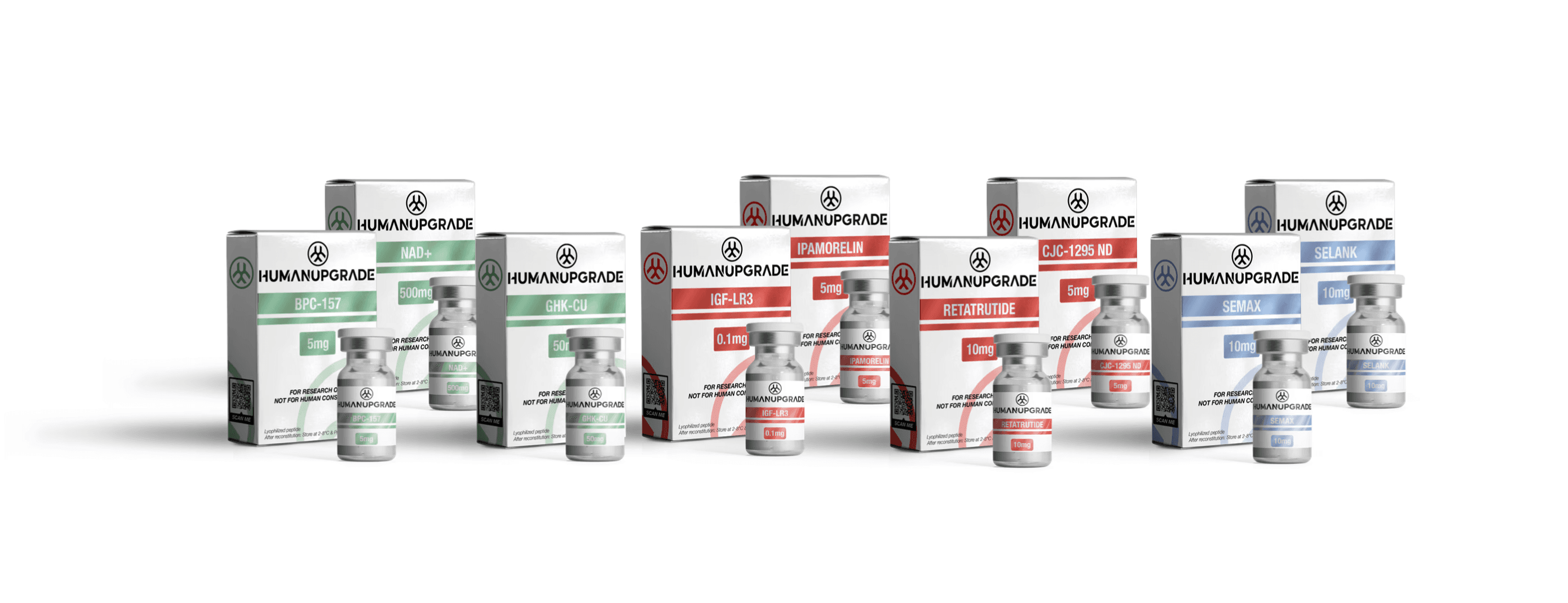
BPC-157
The Body's Master Healer | Body Protection Compound-157 - Pentadecapeptide
What is BPC-157?
BPC-157 is a synthetic pentadecapeptide (15 amino acids) derived from a protective protein found in human gastric juice. It's known for its remarkable healing properties and is extensively researched for tissue repair, inflammation reduction, and gastrointestinal protection. Prohibited by WADA (added 2022) under S0: Non-Approved Substances - no TUE available for athletes.
The Body's Master Healer BPC-157 is a "body protective compound" derived from a protein found in human stomach acid. Its primary job is to speed up the healing of almost everything—from torn tendons and broken bones to an inflamed digestive system.
Key Benefits
Accelerated healing of tendons, ligaments, muscles, bones, and localized tissue repair. Superior bioavailability for targeted healing with anti-inflammatory effects.
Tendon & Ligament Repair: Famous for healing "permanent" injuries like runner's knee or golfer's elbow.
Gut Healing: Repairs the stomach lining and helps with "leaky gut" or IBS.
Reduced Inflammation: Acts as a powerful anti-inflammatory for joints and muscles.
Organ Protection: Helps shield the liver and kidneys from toxin damage.
Pain Relief: Reduces chronic pain by healing the underlying damaged tissue.
Blood Vessel Growth: Promotes "angiogenesis," which brings fresh blood and nutrients to injured areas.
Quick Start Guide
Typical Dose
250-500 mcg
How Often
1-2x daily
Where to Inject
Subcutaneous: abdomen, thigh, or upper arm (or near injury for localized healing)
Injection Timing
Empty stomach preferred
Effects Timeline
1-3 weeks for healing, 3-7 days for inflammation
Storage
Refrigerate at 2-8°C, use within 30 days of reconstitution
Cycle Length
4-12 weeks
Break Between
4+ weeks
Research Indications
🟢 Wound Healing - Most Effective
Tendon Healing
Accelerated tendon-to-bone healing and improved biomechanical properties in injury models. Most effective with localized injection.
Muscle Recovery
Enhanced muscle healing and reduced recovery time following crush injuries and surgical procedures with direct tissue targeting.
Angiogenesis
Promotes blood vessel formation and improves vascularization in healing tissues through localized delivery.
🔵 Neurological - Effective
Neuroprotection
Protective effects against various neurotoxic agents and ischemic brain injury models with systemic administration.
Spinal Cord Injury
Improved functional recovery and reduced tissue damage in spinal cord injury studies via injection.
Peripheral Nerves
Enhanced peripheral nerve regeneration and functional recovery after injury with localized treatment.
⚪️ Gastrointestinal - Moderate
Systemic GI Protection
Injectable BPC-157 provides systemic gastrointestinal protection through circulation, though oral may be more targeted for GI issues.
Ulcer Prevention
Studies show protective effects against stress-induced gastric ulcers through systemic anti-inflammatory mechanisms.
Intestinal Barrier
Supports intestinal barrier function and reduces inflammatory markers through systemic circulation.
What to expect
Week 1-2: Reduced inflammation and pain at injection site
Week 2-4: Improved healing rate and tissue repair
Week 4-8: Maximum localized healing benefits
Side effects: Mild injection site redness or irritation
Most effective for: Tendon, ligament, muscle injuries
Side Effects & Safety
Side Effects | When to Stop |
|---|---|
|
|
Mechanism of Action & Molecular Information
Injectable BPC-157 provides direct tissue targeting and higher local concentrations. Promotes angiogenesis (formation of new blood vessels), enhances collagen synthesis, modulates growth factor expression, and provides localized protection against tissue damage.
Weight | Length | Type |
|---|---|---|
1,419.53 Da | 15 amino acids | Pentadecapeptide |
Amino Acid Sequence: | ||
Gly-Lys-Pro-Pro-Pro-Gly-Lys-Pro-Ala-Asp-Asp-Ala-Gly-Leu-Val | ||
References
Research Studies | Citations |
|---|---|
Gastric Ulcer Protection (2020)
Comprehensive study showing BPC-157's protective effects against gastric ulcers through multiple mechanisms including cytoprotection and enhanced mucosal healing. | Jóźwiak, M., Bauer, M., Kamysz, W., Kleczkowska, P. (2025). Multifunctionality and Possible Medical Application of the BPC 157 Peptide—Literature and Patent Review. Pharmaceuticals, 18(2), 185. DOI: 10.3390/ph18020185 |
Safety Evaluation Study (2020)
Preclinical safety evaluation showing no serious adverse effects at therapeutic doses, establishing safety profile for potential clinical applications. | Seiwerth, S., Milavic, M., Vukojevic, J., et al. (2021). Stable Gastric Pentadecapeptide BPC 157 and Wound Healing. Frontiers in Pharmacology, 12, 627533. DOI: 10.3389/fphar.2021.627533 |
Spinal Cord Injury Recovery (2019)
BPC-157 treatment resulted in significant functional recovery, reduced tissue damage, and improved neurological outcomes in spinal cord injury models. | Hsieh, M.J., Liu, H.T., Wang, C.N., et al. (2017). Therapeutic potential of pro-angiogenic BPC157 is associated with VEGFR2 activation and up-regulation. Journal of Molecular Medicine, 95(3), 323-333. DOI: 10.1007/s00109-016-1488-y |
VEGF and Angiogenesis Study (2017)
Demonstrated BPC-157's pro-angiogenic effects through VEGFR2 activation and upregulation, explaining its wound healing and tissue repair mechanisms. | Staresinic, M., Sebecic, B., Patrlj, L., et al. (2003). Gastric pentadecapeptide BPC 157 accelerates healing of transected rat Achilles tendon and in vitro stimulates tendocytes growth. Journal of Orthopaedic Research, 21(6), 976-983. DOI: 10.1016/S0736-0266(03)00110-4 |
Muscle Healing Research (2006)
Accelerated healing of transected quadriceps muscle with improved histological appearance, reduced inflammatory markers, and restored muscle function compared to control groups. | Chang, C.H., Tsai, W.C., Lin, M.S., Hsu, Y.H., Pang, J.H. (2011). The promoting effect of pentadecapeptide BPC 157 on tendon healing involves tendon outgrowth, cell survival, and cell migration. Journal of Applied Physiology, 110(3), 774-780. DOI: 10.1152/japplphysiol.00945.2010 |
Achilles Tendon Healing Study (2003)
BPC-157 demonstrated superior healing of transected Achilles tendons compared to controls, with improved biomechanical properties, faster functional recovery, and enhanced tendon-to-bone integration. | Staresinic, M., Petrovic, I., Novinscak, T., et al. (2006). Effective therapy of transected quadriceps muscle in rat: Gastric pentadecapeptide BPC 157. Journal of Orthopaedic Research, 24(5), 1109-1117. DOI: 10.1002/jor.20089 |
Sikiric, P., Seiwerth, S., Rucman, R., et al. (2011). Stable gastric pentadecapeptide BPC 157: novel therapy in gastrointestinal tract. Current Pharmaceutical Design, 17(16), 1612-1632. DOI: 10.2174/138161211796196954 | |
Sikiric, P., Hahm, K.B., Blagaic, A.B., et al. (2020). Stable Gastric Pentadecapeptide BPC 157, Robert's Stomach Cytoprotection. Gut and Liver, 14(2), 153-167. DOI: 10.5009/gnl18490 | |
He, L., Feng, D., Guo, H., et al. (2022). Pharmacokinetics, distribution, metabolism, and excretion of body-protective compound 157. Frontiers in Pharmacology, 13, 1026182. DOI: 10.3389/fphar.2022.1026182 | |
Vukojevic, J., Milavić, M., Perović, D., et al. (2022). Pentadecapeptide BPC 157 and the central nervous system. Neural Regeneration Research, 17(3), 482-487. DOI: 10.4103/1673-5374.320969 | |
Perovic, D., Kolenc, D., Bilic, V., et al. (2019). Stable gastric pentadecapeptide BPC 157 can improve the healing course of spinal cord injury and lead to functional recovery in rats. Journal of Orthopaedic Surgery and Research, 14(1), 199. DOI: 10.1186/s13018-019-1242-6 | |
Xu, C., Sun, L., Ren, F., et al. (2020). Preclinical safety evaluation of body protective compound-157, a potential drug for treating various wounds. Regulatory Toxicology and Pharmacology, 114, 104665. DOI: 10.1016/j.yrtph.2020.104665 |
Important Note
This content is intended for educational purposes only and is not medical advice, diagnosis, or treatment.
Legal Disclaimer
All products listed, sold, mentioned, acquired on or through this website and other contact methods are intended strictly for laboratory and research purposes only. They are not for human consumption, veterinary use, or any form of in vivo experimentation. These materials are provided solely for qualified individuals, institutions, and professionals engaged in legitimate scientific research and testing.
By accessing this website, making an inquiry, placing an order, or engaging with us, you acknowledge and agree that:
You are a qualified researcher, scientist, or institutional representative with the appropriate knowledge and facilities to safely handle materials of this nature.
You understand and accept that the products are not to be used for any other purposes, including but not limited to medical, diagnostic, therapeutic, or recreational use.
You understand that the products supplied are not approved by the FDA, EMA, or any other regulatory authority for human or animal use.
You will use all products solely in accordance with applicable laws, regulations, and safety standards, and will not resell, distribute, or otherwise make them available for any prohibited purpose.
You assume full responsibility for compliance with all applicable laws, regulations, and safety procedures regarding the handling, storage, and use of research chemicals and peptides.
By contacting, communicating with, or purchasing from this website or other contact methods (including but not limited to phone, forms, email, messaging apps etc.), you confirm your compliance with these conditions and agree to be bound by all associated terms and conditions.
The site owner, operators and its affiliates shall not be held liable for any misuse, handling errors, or consequences arising from improper application of these materials.